
Accelerating new malaria tools offers hope for faster elimination
KAMPALA – In the face of rising resistance to anti-malarial drugs and insecticide, introducing new malaria solutions faster could bring malaria-endemic countries closer to eliminating the disease. Participants at the strategic dialogue on the introduction of new tools held this week highlighted the urgent need to quickly move the numerous new tools that are in the pipeline from innovation to market-ready and sustainable products that people can effectively use to fight the disease that kills 600,000 people globally every year.
Organized by the Uganda Ministry of Health in collaboration with RBM Partnership to End Malaria, and funded by the Foreign, Commonwealth and Development Office, the meeting brought together researchers, government representatives, donors, private sector and civil society to discuss ways how to best accelerate new malaria tools so that they can be socially acceptable, reach people who need them the most faster and at affordable prices.
In addition to existing malaria solutions, the past years have seen the introduction of new tools such as two World Health Organization approved vaccines, dual-insecticide treated mosquito nets and new malaria medicine to treat babies more effectively. Scientists are working on long acting injectable medicine that could protect from malaria for months. Drones and artificial intelligence have been used to identify and target mosquito breeding sites while spatial emanators are repelling mosquitoes more effectively, and improving vector control. African researchers are working on mosquito gene drive technology that involves the genetic modification of mosquitoes to make them unable to carry or transmit the malaria parasite or affect their ability to reproduce.
“Uganda is part of the many African countries that are showing leadership and commitment in the fight against malaria. With growing information and technology, now is the time for the global malaria ecosystem to unite and invest in eliminating malaria once and for all. We can only win the fight against malaria if we invest adequate national and global resources in the introduction of new tools,” said Uganda Minister of Health, Dr Jane Ruth Aceng Ocero.
In the face of the perfect storm of anti-malarial drug resistance, insecticide resistance, unpredictable climate patterns, rising conflict and limited resources, malaria experts continue to warn that without fast action, there could be a malaria resurgence – with devastating effect. According to a 2025 report by RBM partners, a collapse in malaria prevention efforts could cause 990,000 additional deaths and wipe US $ 83 billion from Africa’s GDP. Conversely, getting back on track towards the SDG targets for malaria would see African countries gain a collective $230 billion in GDP by 2030.
“It is a complex yet crucial time to come together for a united and powerful Big Push against malaria and the threat it carries to lives and economies. The Big Push against malaria is not another global health strategy to sit alongside the others. It is a fundamental shift in how the malaria community organizes itself. The Big Push rests on a simple but powerful premise: the world will only become eradication-ready when all actors push in the same direction — aligned behind endemic-country leadership, coordinated around shared priorities, and supported by sustained political commitment and financing. That is why this dialogue was so important. By investing more to accelerate the introduction of new tools, we can make malaria elimination one of the greatest achievements of our lifetime,” RBM CEO, Dr Michael Adekunle Charles.
The World Malaria Report indicates that wider use of new tools such as dual insecticide treated nets and vaccines helped prevent 170 million cases and one million deaths in 2024. RBM is working with partners and countries to strengthen national leadership and global support in the introduction of new tools, strengthen health systems capacity in the use of these tools while strengthening the pipeline to deliver affordable, accessible and socially acceptable malaria solutions. Participants at the strategic dialogue expressed optimism that together, they can reach the remarkable milestone of eliminating malaria in their lifetime. They highlighted the role of multi-sectoral and cross-border collaboration in taking new tools from the innovation spaces to public usability. They called for increased investment to enable the tools to reach those who need them most.
***
About RBM Partnership to End Malaria
The RBM Partnership to End Malaria is the world’s largest platform dedicated to eliminating malaria, a mission it has championed since 1998. With over 500 partners, including malaria-endemic countries, bilateral and multilateral development agencies, private sector organizations, and community-based groups, RBM is accelerating collective action to end malaria through one last Big Push – a unified voice and action to confront the disease and its impact on people, health systems and development.
For more information, contact Patience Akumu, RBM Partnership to End Malaria Advocacy and Communications Specialist, email: patiencea@unops.org, phone: +256700964398.
Facebook: RBMPartnership, X: @endmalaria LinkedIn: RBM Partnership to End Malaria
Emmanuel Ainebyoona, Senior Communication officer, Ministry of Health (Uganda), e-mail: emmanuel.ainebyoona@health.go.ug phone: +256779220588 or +256706428093
Latest Perspectives
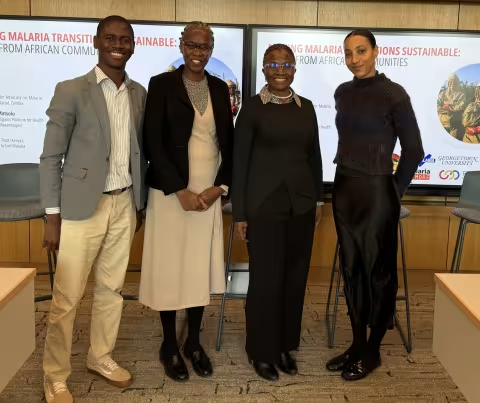
The Path to Zero Malaria Must Be Rooted in Africa Country leadership, Science and Communities
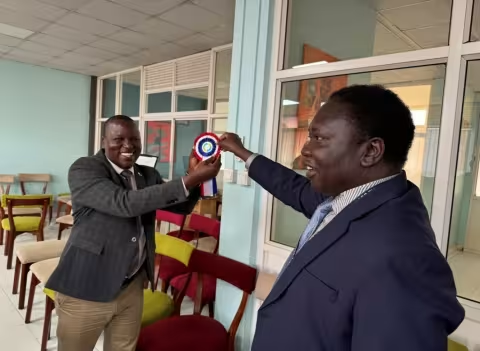
Linking malaria to SDGs in situations of extreme vulnerability